
 (573) 754-2482
  Open 7am–6pm Mon–Fri, 7am–3pm Sat
Why Lincoln County Yards Flood: Clay Hardpan, Explained
I’m Brandon Bange, and I run heavy equipment across Lincoln County yards all week. The number one call I get, by a mile, is some version of “my yard floods every time it rains and I’m sick of looking at it.” So let me tell you what’s actually going on under your grass — because once you understand the dirt, the fix makes a lot more sense.
What is clay hardpan, anyway?
Most of Lincoln County sits on clay-heavy soil, and underneath the thin layer of topsoil there’s often a dense layer folks call hardpan. It’s clay that’s packed so tight water can barely move through it. Sandy soil drains like a coffee filter. Clay hardpan drains like a dinner plate — the water just sits on top and looks for the lowest spot to pool.
That’s great for one thing: it holds a foundation rock solid. It’s terrible for everything else. When the rain comes, the water can’t soak down, so it runs sideways across your yard until it finds a low corner, a flower bed, or worse, the side of your house.
Why does my yard flood every single spring?
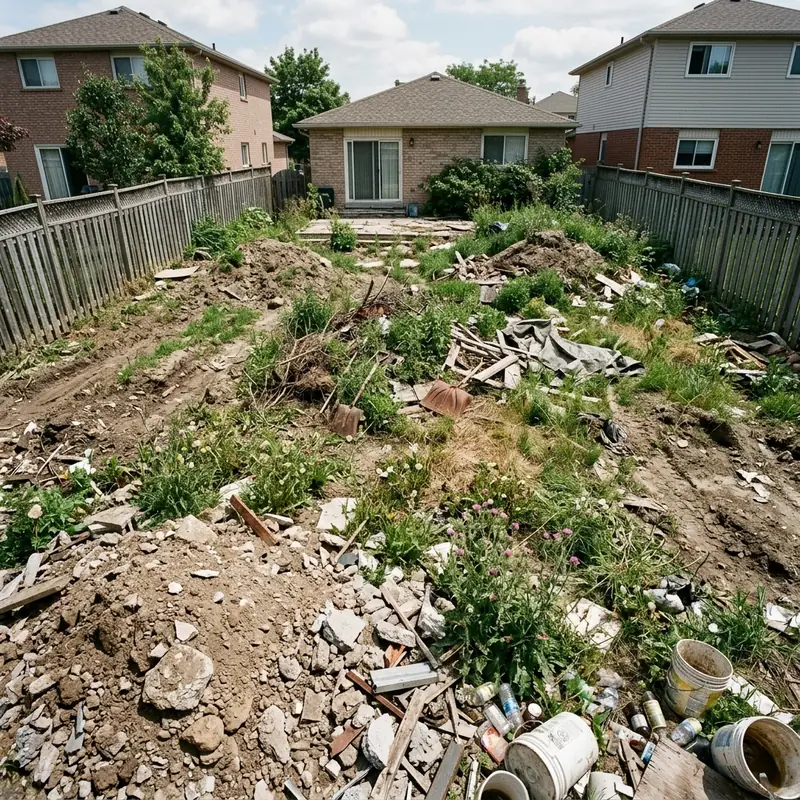
Spring is when it shows up worst because the ground is already saturated from winter, the clay is cold and tight, and we get those long soaking rains. Add a yard that was rough-graded flat when the house went in, and you’ve got a bathtub with no drain. The water has nowhere to go and nothing to soak into, so it ponds.
I see this constantly in the newer subdivisions off Highway 47 and up around Highway 61 in Troy. The builder grades the lot just enough to set the house and pass inspection, the topsoil’s thin, and the first wet spring tells you exactly where the water wants to live.
Is clay hardpan ruining my foundation?
It can, and that’s the part that should get your attention. When water pools against the foundation, clay holds it right there against the footing. Over time that’s how basements get damp, how cracks show up, and how you end up paying a foundation guy a whole lot more than you’d have paid me to fix the grade. Standing water near the house isn’t just ugly — it’s expensive if you ignore it.
So how do you actually fix clay that won’t drain?
You can’t make clay soak up water — it’s not going to happen. So instead of fighting the dirt, you give the water somewhere to go. There are two honest fixes:
- Regrade the yard so it slopes away from the house and runs water to a lower spot. This is the cheaper option when there’s somewhere downhill for the water to head. That’s yard grading and leveling.
- Install a French drain to catch the water underground and pipe it out to the street or a ditch. This is what you need when the yard’s flat or trapped with nowhere to run. That’s French drains and water routing.
A lot of yards need a mix of both. The trick is knowing which one your specific lot needs, and that’s not something you can eyeball from a brochure.
What I’d do on your place
I’d come walk it with you, ideally right after a rain so I can see where the water actually sits and which way it wants to move. I’ll check whether you’ve got any fall to work with, look at where the water’s pooling relative to the house, and tell you straight: regrade, drain, or both. I won’t sell you the bigger job if a regrade fixes it — that’s a good way to lose every neighbor you’ve got, and around here word travels fast.
{{CASE_STUDY_NEEDS_BRANDON}}
If your yard’s been a swamp every spring and you’re done with it, book a bid and I’ll come tell you what it’ll take. Every call gets answered, day or night — you won’t hit voicemail or wait six weeks.